
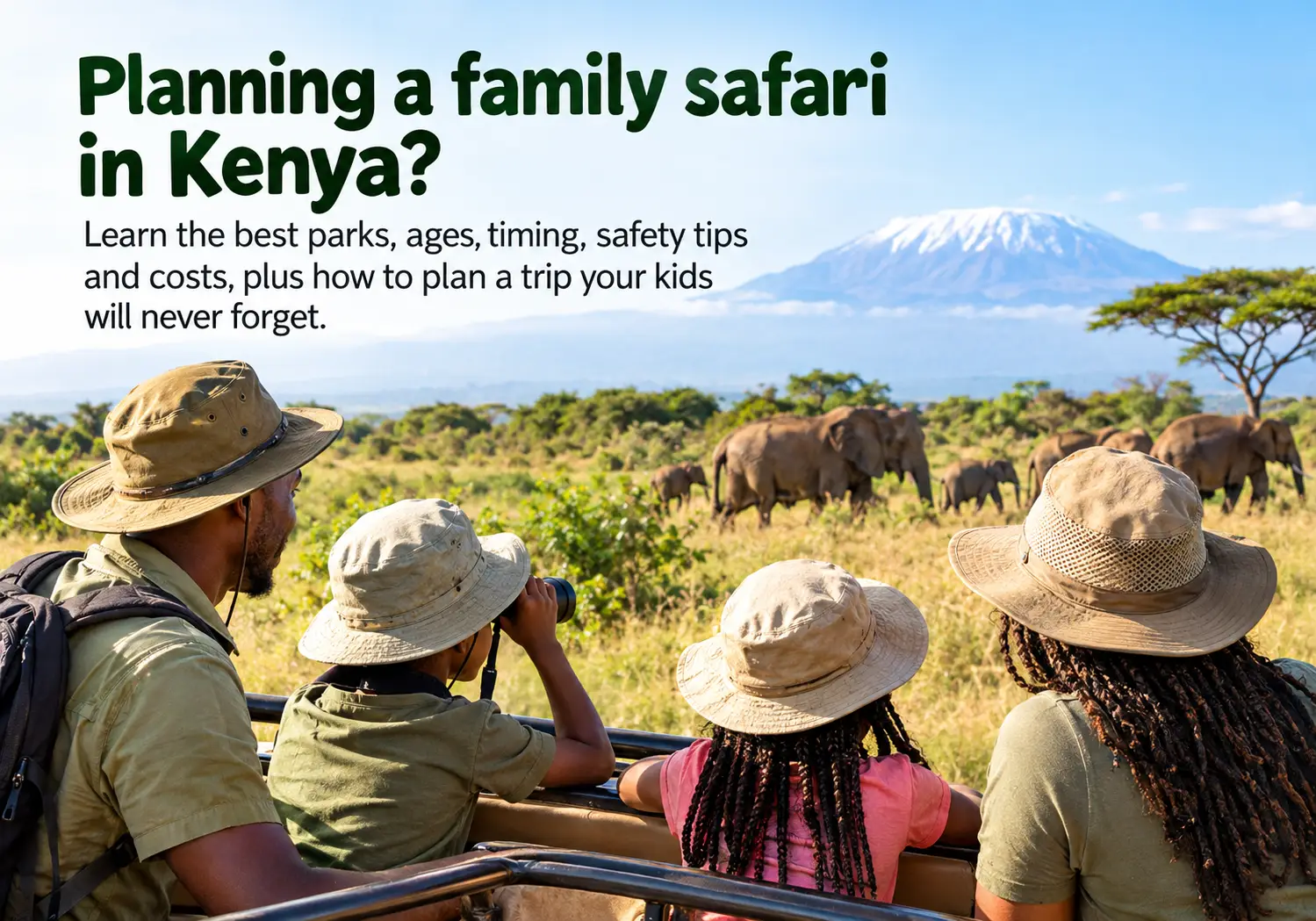
The Ultimate Guide to Family Safaris in Kenya
A family safari in Kenya is one of the most rewarding trips you can take together. Children watch lions hunt, giraffes stroll past the car, and elephants wade through rivers. Parents, meanwhile, enjoy quality time without screens or schedules. However, a safari with kids needs smarter planning than a trip for adults. This guide explains how to get it right.
Key Takeaways: Family Safaris in Kenya
| Question | Quick Answer |
|---|---|
| Is Kenya good for family safaris? | Yes. It offers short flights, varied parks, and many family-friendly camps. |
| Best age to go | Most families start from about 6 years old. Policies vary by camp. |
| Best time to visit | July to October for the Great Migration. January to February is also excellent. |
| Ideal trip length | 7 to 10 days, with 2 to 3 nights in each location. |
| Best first destination | The Masai Mara, often paired with Amboseli or the coast. |
| Biggest planning tip | Book a private guide and a family-friendly camp early. |
Why Choose Kenya for a Family Safari?
Kenya suits families for several reasons. First, wildlife viewing is outstanding. Second, distances between top destinations are short, so children spend less time in transit. Third, the country offers a wide choice of camps, from relaxed tented lodges to private villas.
Moreover, Kenya combines easily with a beach stay. Many families finish their trip at Diani or the Kenyan coast. As a result, parents get a rest and children get a swim after days of game drives.
Finally, Kenya gives children a living lesson in culture and conservation. They meet Maasai guides, learn how communities protect wildlife, and see why it matters.
What Age Is Best for a Safari With Kids?
There is no single right age. Instead, think about your child’s patience, curiosity and energy.
- Under 5: Many camps do not accept very young children, or they limit the activities. Private villas and family-run camps are the best option.
- Ages 6 to 9: This age group enjoys short game drives, junior ranger programmes and storytelling around the fire.
- Ages 10 to 14: Older children can join longer drives, learn tracking skills and try guided bush walks at some camps.
- Teenagers: They often love photography, night drives and cultural visits.
Always check each camp’s age policy before you book. Some camps set a minimum age for walking safaris and night drives, and some limit access to shared vehicles.
Best Places for a Family Safari in Kenya
1. Masai Mara
The Masai Mara is the classic choice. Its open plains make animals easy to spot, so children rarely get bored. Furthermore, the surrounding conservancies offer smaller crowds and flexible activities.
From July to October, the Great Migration brings huge herds of wildebeest and zebra. During this period, families may also see the famous Mara River crossings.
Best for: First-time families, big cat sightings and the migration.
2. Amboseli National Park
Amboseli is famous for its large elephant herds and views of Mount Kilimanjaro. In addition, the open landscape makes photography simple. Children love watching elephants up close.
Best for: Elephant lovers, photographers and shorter trips.
3. Lake Nakuru and Lake Naivasha
These lakes sit in Kenya’s Rift Valley and offer a gentler pace. At Lake Nakuru, families can spot rhinos, flamingos and buffalo. Meanwhile, Lake Naivasha offers boat rides, birdwatching and cycling at certain locations.
Best for: Younger children and travellers who want variety.
4. Laikipia
Laikipia is a wildlife-rich region of private conservancies in central Kenya. It offers horse riding, camel walks and conservation experiences. Because activities here are flexible, many families rate it highly.
Best for: Active families and older children.
5. Samburu
Samburu lies in northern Kenya and offers rare species such as the Grevy’s zebra and reticulated giraffe. Furthermore, it gives families a chance to meet Samburu communities.
Best for: Families who want something different and cultural.
6. Diani Beach (Coast Extension)
After your safari, relax on the white sands of the Kenyan coast. Children can swim, snorkel and build sandcastles while parents recover from early starts.
Best for: A relaxing end to a safari.
When Is the Best Time for a Family Safari in Kenya?
Kenya is a year-round destination. Nevertheless, timing affects wildlife, weather and price.
| Season | Months | What to Expect |
|---|---|---|
| Peak dry season | July to October | Great Migration, excellent game viewing, higher prices |
| Short dry season | January to February | Warm and dry, calving season on the plains, fewer visitors |
| Short rains | November to December | Green landscapes, fewer crowds, some rain |
| Long rains | March to May | Lower rates and quiet parks, but some roads and camps may close |
For most families, school holidays decide the dates. Therefore, book early for July, August and December. Popular family camps fill up months in advance.
How Long Should a Family Safari Be?
We recommend 7 to 10 days. This length gives children time to rest between drives. In addition, it lets you visit two or three areas without rushing.
A simple family itinerary looks like this:
- Days 1 to 3: Arrive in Nairobi, then fly to the Masai Mara.
- Days 4 to 6: Stay in a conservancy for game drives and a cultural visit.
- Days 7 to 8: Travel to Amboseli for elephants and mountain views.
- Days 9 to 10: Relax at the coast before flying home.
Of course, we tailor every itinerary to your children’s ages and interests.
How to Choose a Family-Friendly Safari Camp
Not every camp suits children. Therefore, ask these questions before you book:
- Does the camp accept your children’s ages?
- Does it offer family tents or interconnecting rooms?
- Are there junior ranger or activity programmes?
- Is the camp fenced, or do staff escort guests after dark?
- Does it have a pool?
- Can you book a private vehicle and guide?
A private vehicle matters most. With one, you control the pace. You can stop for a snack, leave early when someone is tired, or stay longer at a sighting that excites the children.
Family Safari Activities Kids Love
Children engage best when they take part. As a result, the right activities can make or break a trip.
- Junior ranger programmes: Children learn tracking, animal behaviour and bush skills.
- Maasai cultural visits: Kids learn about daily life, music and traditions.
- Bush breakfasts and picnics: A meal on the plains feels like an adventure.
- Night drives: Available in many conservancies, these show nocturnal animals. Camps often set age limits.
- Conservation projects: Visits to community schools and wildlife projects show children how tourism helps.
- Hot air balloon rides: In the Masai Mara, balloon flights offer sunrise views. Operators usually set minimum ages.
Health and Safety for Families
Safety comes first on any family trip. Fortunately, Kenya has well-established safari standards.
- Medical advice: See your doctor or a travel clinic several weeks before you travel. Ask about malaria prevention, routine vaccinations and any treatment for children.
- Insurance: Take comprehensive travel and medical evacuation insurance.
- Sun and insects: Pack high-factor sunscreen, hats and insect repellent that suits children.
- Guides: Choose experienced guides who know how to manage children around wildlife.
- Rules: Teach children to stay seated in vehicles, keep their voices low and follow staff instructions.
Also, check current entry and visa requirements for Kenya before you travel, because rules can change.
What to Pack for a Family Safari
- Neutral-coloured clothing, such as khaki, olive and tan
- Warm layers for early mornings and evenings
- Sun hats and sunglasses
- Binoculars for each child
- A small notebook or animal checklist
- Reusable water bottles
- Basic medicines and a first-aid kit
- Chargers and a camera with extra storage
In short, pack light. Most small aircraft have strict luggage limits, and soft bags are usually required.
How Much Does a Family Safari in Kenya Cost?
Costs vary widely. They depend on the season, camp style, group size and length of stay. For instance, a luxury family safari with private guides and conservancy stays costs more than a shared-vehicle trip.
Several factors shape the price:
- Camp or lodge category
- Time of year
- Park and conservancy fees
- Internal flights
- Private versus shared vehicles
- Child discounts, which many camps offer
For an accurate quote, contact us with your dates, group size and children’s ages. We will then design a trip within your budget.
Tips for a Smooth Family Safari
- Keep drives short. Two game drives a day suit most children.
- Build in downtime. Pool time and rest keep everyone happy.
- Bring snacks. Hungry children get restless quickly.
- Involve your kids. Let them pick a wildlife bingo card or keep a journal.
- Stay flexible. Wildlife is unpredictable, so adapt the plan as you go.
Frequently Asked Questions
Is Kenya safe for a family safari? Yes. Kenya has a long safari tradition, and camps follow clear safety rules. Choose an experienced operator, listen to your guide and follow health advice.
What is the minimum age for a safari in Kenya? There is no national minimum age, but individual camps set their own policies. Many accept children from about 5 or 6, while some welcome younger children in private villas.
What is the best time for a family safari in Kenya? July to October is best for the Great Migration. January and February are also excellent, with warm weather and fewer visitors.
How many days do we need for a family safari in Kenya? We suggest 7 to 10 days. That gives you time to visit two or three destinations at a relaxed pace.
Can children join walking safaris and night drives? Sometimes. Age limits vary between camps and conservancies, so confirm before you book.
Should we book a private or shared safari vehicle? A private vehicle is the better choice for families. It gives you flexibility, comfort and a guide focused on your children’s interests.
Can we combine a safari with a beach holiday? Yes. Many families add a few nights on the Kenyan coast after their safari.
Plan Your Family Safari With Wild Sights Safaris
We design every family journey around your children. First, we learn your family’s ages, interests and pace. Next, we match you with camps we have personally visited and trust. Finally, we arrange private guides, flights and activities, so you can simply enjoy the adventure.
Every trip also supports conservation and local communities. As a result, your family creates memories and makes a difference at the same time.